



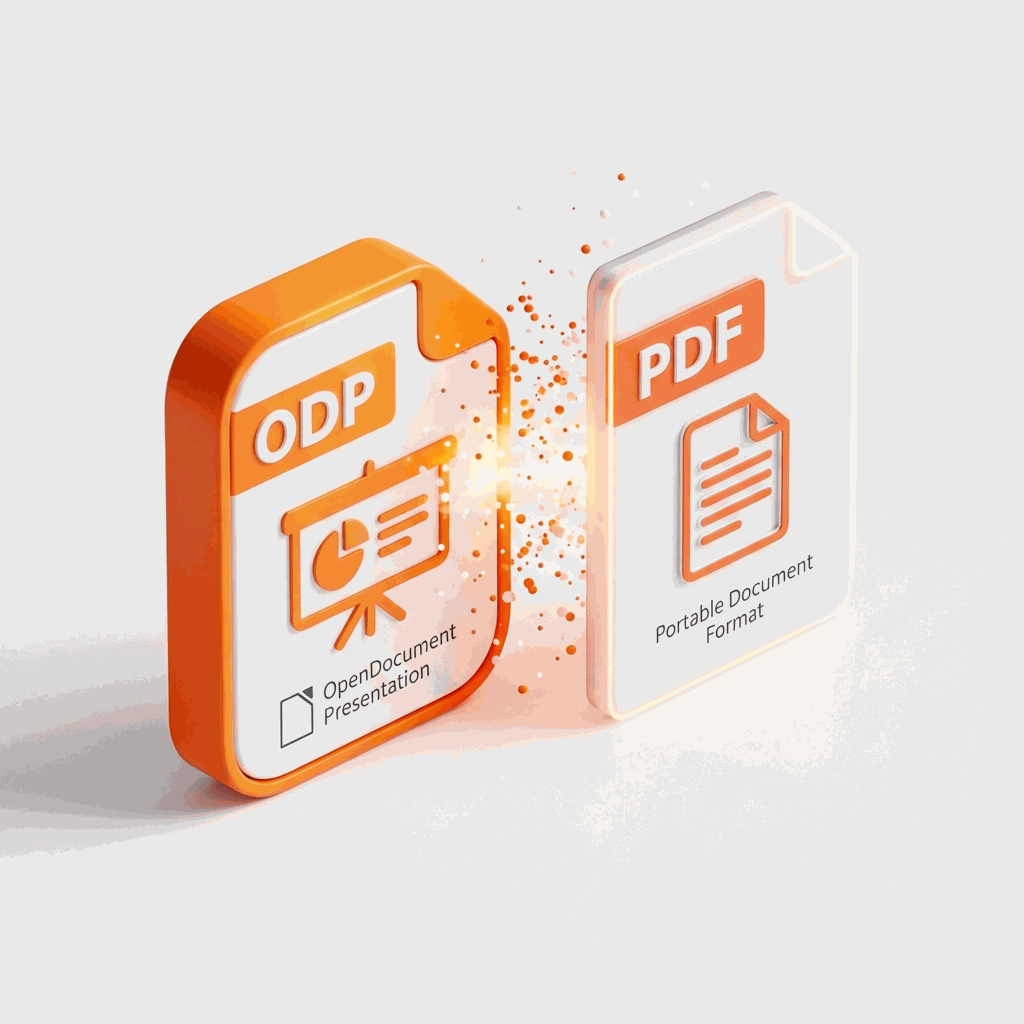
In the diverse world of digital presentations, the ODP format stands as a beacon of open-source freedom. Yet, when it comes to finalized delivery, nothing beats the universality of PDF.
What is an ODP File?
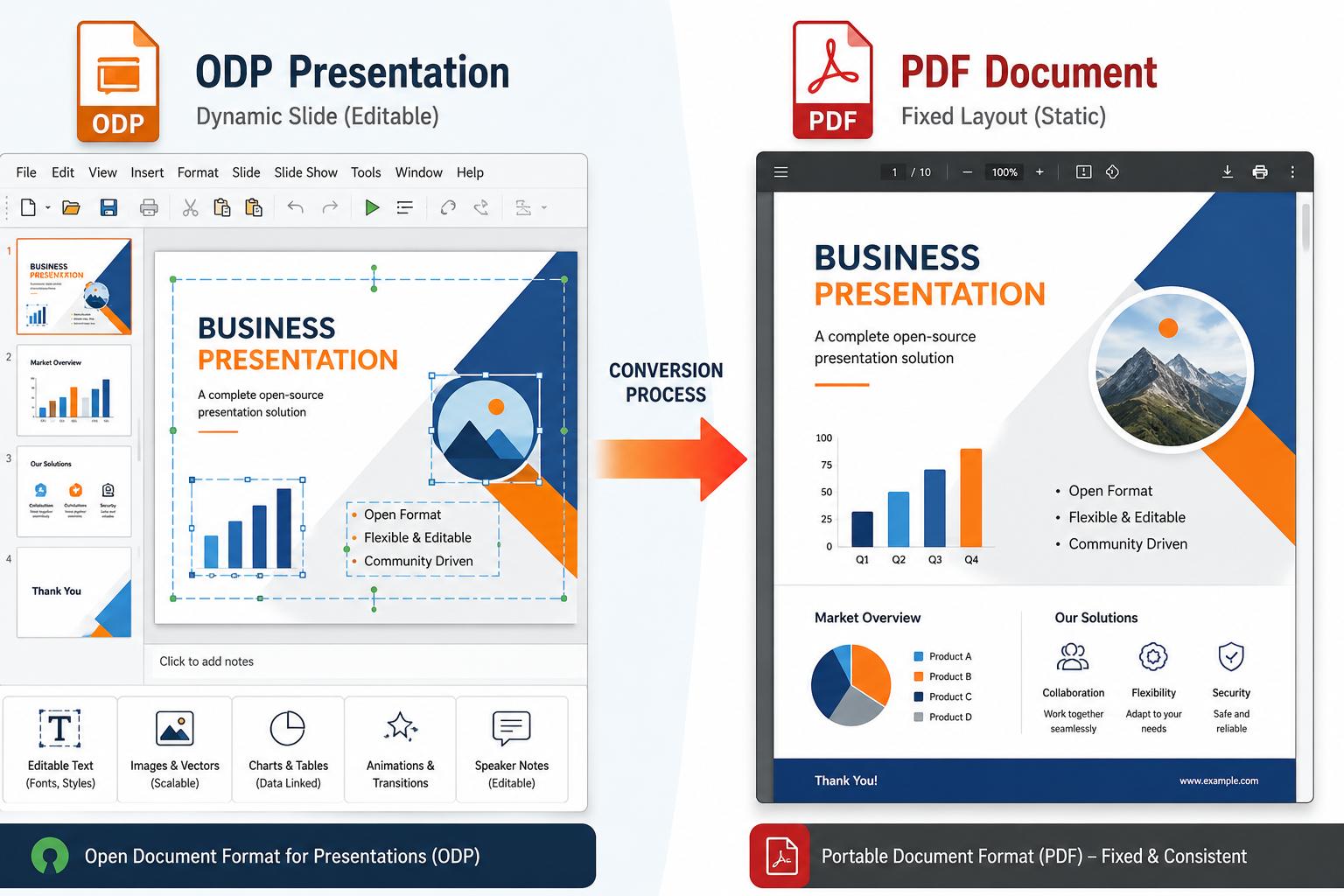
The .ODP file extension refers to an OpenDocument Presentation file. It is the default format used by the Impress application in open-source office suites like LibreOffice and Apache OpenOffice.
Much like Microsoft PowerPoint's .PPTX files, ODP files contain slides that can include text, images, videos, charts, and transition effects. They are based on the XML-based OpenDocument standard (OASIS), designed to make office documents compatible across different platforms and applications.
- Open Source standard ensuring long-term access.
- XML-based architecture for smaller file sizes.
- Platform independent (Windows, Linux, macOS).
- Free from proprietary vendor lock-in.
Why Turn ODP into PDF?
While ODP is powerful, sharing a presentation in its native format can be risky. Fonts might be missing on the recipient's computer, layout shifts can occur, or they might not have a compatible Office suite installed. Converting to PDF solves all these issues instantly.
Universal Viewing
PDFs can be opened on literally any modern device—smartphones, tablets, e-readers, and computers—without needing specialized presentation software.
Format Preservation
Your meticulously placed images, custom fonts, and charts are "baked" into the document. The recipient sees exactly what you designed, pixel for pixel.
Easy Distribution
PDF files are typically smaller and easier to email, upload to websites, or print professionally than raw presentation files.
A Brief History of ODP
The .ODP format is part of the OpenDocument Format (ODF) standard, which was developed by the OASIS consortium to provide an open, XML-based alternative to proprietary formats like Microsoft's .PPT.
Key Milestones:
- 1999Sun Microsystems releases StarOffice 5.2 (using the older .sdp format).
- 2002OpenOffice.org 1.0 launches, paving the way for open standards.
- 2005The OpenDocument format (including .odp) becomes an OASIS standard.
- 2006ODF is published as an international standard (ISO/IEC 26300).
Detailed Comparison: ODP vs. PDF
| Feature | ODP (OpenDocument) | PDF (Portable Document) |
|---|---|---|
| Editability | High (Designed for editing slides) | Low (Designed for viewing) |
| Animations | Supported (Transitions, effects) | Not Supported (Static pages) |
| Compatibility | Requires LibreOffice/OpenOffice | Universal (Any browser/viewer) |
| Printing | Can vary by printer settings | Industry standard for print |
| Security | Basic password protection | Advanced encryption, signing |
How Our ODP to PDF Converter Works
We employ a state-of-the-art rendering engine that mimics the precise behavior of LibreOffice Impress under the hood. When you upload your file:
- Analysis: We scan the ODP XML structure to identify slides, master pages, and assets.
- Rendering: Each slide is virtually rendered to a high-resolution canvas, preserving vector graphics and font metrics.
- Compilation: These rendered pages are compiled into a structured PDF document.
- Optimization: The final PDF is compressed for web distribution without sacrificing visual quality.
Frequently Asked Questions
Will my animations work in the PDF?
No. By definition, a PDF is a static document format. Animations and slide transitions will be flattened into static images representing the final state of the slide.
Is it compatible with PowerPoint?
Yes, modern versions of PowerPoint can open ODP files, and our resulting PDFs can be viewed on any computer that runs Office, though you won't need Office to view them.
Is this tool free?
Absolutely. Our ODP to PDF converter is 100% free to use for all users, with no registration required for basic conversions.
Ready to Convert?
Transform your presentations into professional documents in seconds. No software installation needed.